Towards Autonomous Web Interaction: Empowering WebAgents by Large Foundation Models
WebAgents Tutorial at PAKDD'26
Tell Me More!

About

Despite the importance of the web, many tasks performed on it are repetitive and time-consuming, negatively impacting overall quality of life. To efficiently handle these tedious daily tasks, one of the most promising approaches is to advance autonomous agents to incorporate human-like intelligence based on Artificial Intelligence (AI) techniques, referred to as AI Agents. AI Agents offer significant advantages in handling such tasks since they can operate continuously without fatigue or performance degradation. Therefore, leveraging AI Agents -- termed WebAgents in the context of Web -- to automatically assist people in handling tedious daily tasks can dramatically enhance productivity and efficiency. Recently, Large Foundation Models (LFMs) containing billions of parameters have exhibited human-like language understanding and reasoning capabilities, showing proficiency in performing various complex tasks. This naturally raises the question: Can LFMs be utilized to develop powerful AI Agents that automatically handle web tasks, providing significant convenience to users? To fully explore the potential of LFMs, extensive research has emerged on WebAgents designed to complete daily web tasks according to user instructions, significantly enhancing the convenience of daily human life. In this tutorial, we comprehensively review existing research studies on WebAgents across three key aspects: architectures, training strategies, and trustworthiness. Additionally, several promising directions for future research are explored to provide deeper insights.

Our Survey Paper: A Survey of WebAgents: Towards Next-Generation AI Agents for Web Automation with Large Foundation Models

Slides: WebAgent-Slides-Part-1 and WebAgent-Slides-Part-2


TARGET AUDIENCE AND PREREQUISITES FOR THE TUTORIAL

The audience of this tutorial could be college students, researchers in academic institutions, and industrial AI labs who are interested in Large Foundation Models (LFMs) and WebAgents. The audience is expected to have basic knowledge of artificial intelligence, foundation models, and agent techniques. However, this tutorial will be presented at the college junior/senior level so that it can be comfortably followed by academic researchers or industrial practitioners who are interested in this emerging field but not quite familiar with it. After attending this tutorial, the audience is expected to have a comprehensive understanding of WebAgents and obtain some insights about the potential research directions in this field.

Event Dates

Tuesday, June 9, 2026

Tutorial Syllabus

The topics of this tutorial include (but are not limited to) the following:

  • WebAgents
  • Large Foundation Models
  • Pre-training
  • Fine-tuning
  • Reinforcement Learning
  • Trustworthiness

    The tutorial outline is shown below:

  • Introduction of WebAgents (15 minutes)
  • Preliminaries of AI Agents and LFM-based WebAgents (30 minutes)
    • Reinforcement learning-based Agents
    • Large foundation model-empowered Agents
    • AI Agents for Web Automation
  • Architecture of WebAgents and Main Modules (30 minutes)
    • WebAgents architecture overview
    • Perception in WebAgents
    • Planning and Reasoning in WebAgents
    • Execution in WebAgents
  • Coffee Break (20 minutes)
  • Training of WebAgents (30 minutes)
    • Data Used for Training
    • Training Strategies in WebAgents
  • Trustworthy WebAgents (30 minutes)
    • Safety and Robustness in WebAgents
    • Privacy in WebAgents
    • Generalizability in WebAgents
  • Challenges and Future Directions of WebAgents (15 minutes)
    • Personalized WebAgents
    • Domain-Specific WebAgents
    • Trustworthy WebAgent
    • Dataset and Benchmark of WebAgent
  • Q&A (10 minutes)
  • Organization


    Tutorial TUTORS
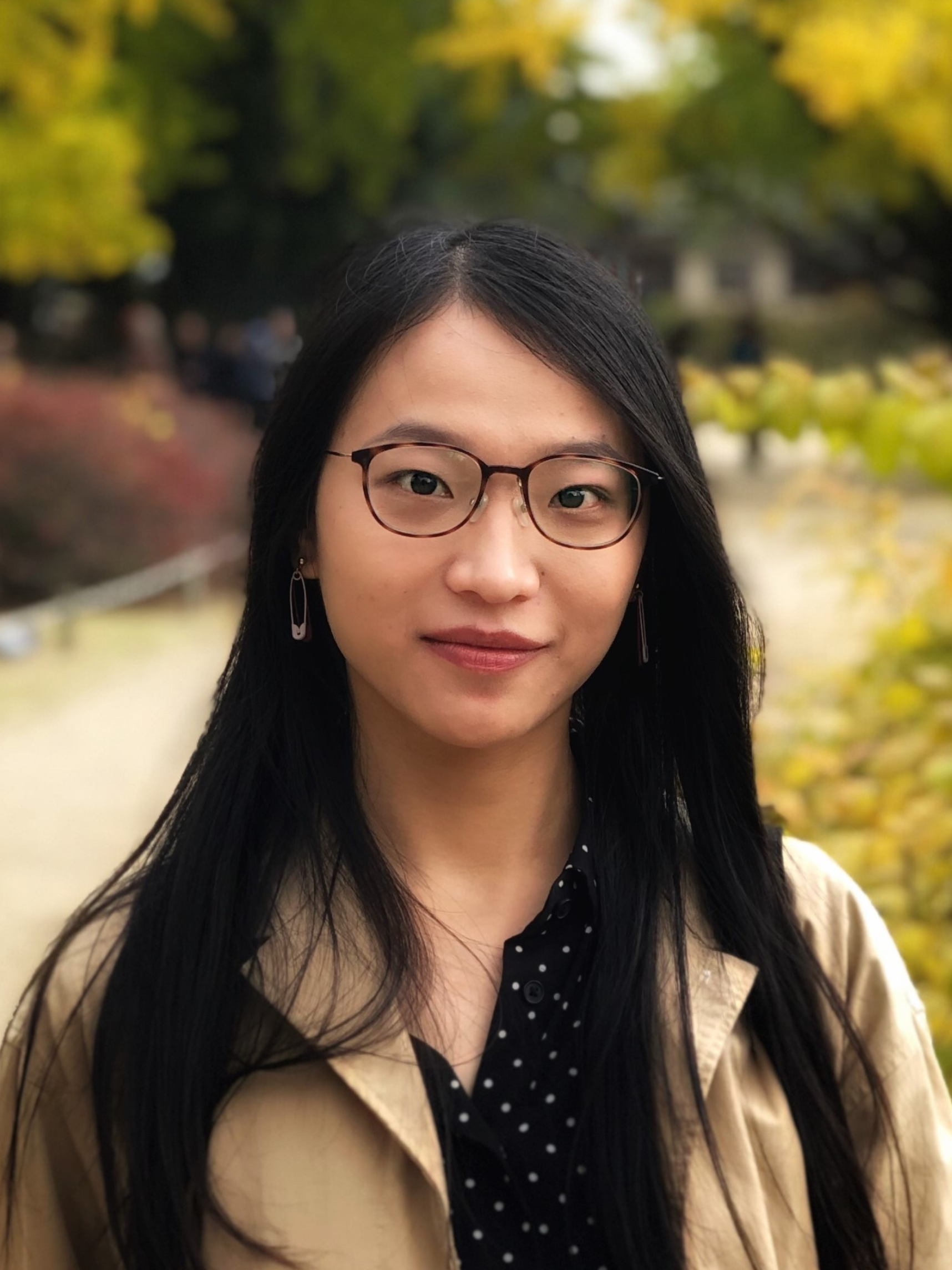
    Yujuan Ding

    Research Assistant Professor

    The Hong Kong Polytechnic University

    Liangbo Ning

    PhD Candidate

    The Hong Kong Polytechnic University

    Ziran LIANG

    PhD Candidate

    The Hong Kong Polytechnic University

    Chun-Hin CHAN

    MPhil Student

    The Hong Kong Polytechnic University

    Yi ZHOU

    PhD Candidate

    The Hong Kong Polytechnic University

    Haohao Qu

    PhD Candidate

    The Hong Kong Polytechnic University

    Wenqi Fan

    Assistant Professor

    The Hong Kong Polytechnic University (PolyU)